You think you know Caribbean food? You’ve seen the glossy brochures, the picture-perfect beaches, the rum cocktails. But trust me, you haven’t scratched the surface until you’ve dug deep into the heart of Barbados’ culinary soul. And at that heart, beating strong every Saturday, lies a dish that’s more than just food: Pudding and Souse. It’s a ritual. A tradition. A profound statement of Bajan identity.
I’ve spent decades trailing food stories, from bustling hawker stalls in Southeast Asia to Michelin-starred kitchens in Europe. But few traditions hold the sheer magnetic pull, the raw, unfiltered community spirit, of Pudding and Souse day in Barbados. This isn’t just about eating; it’s about connection, history, and a flavor profile you won’t find anywhere else on earth. The ugly truth that most travel guides hide is that you can’t truly understand a culture without tasting its unvarnished truths. And Pudding and Souse? That’s Barbados on a plate, no filters needed.
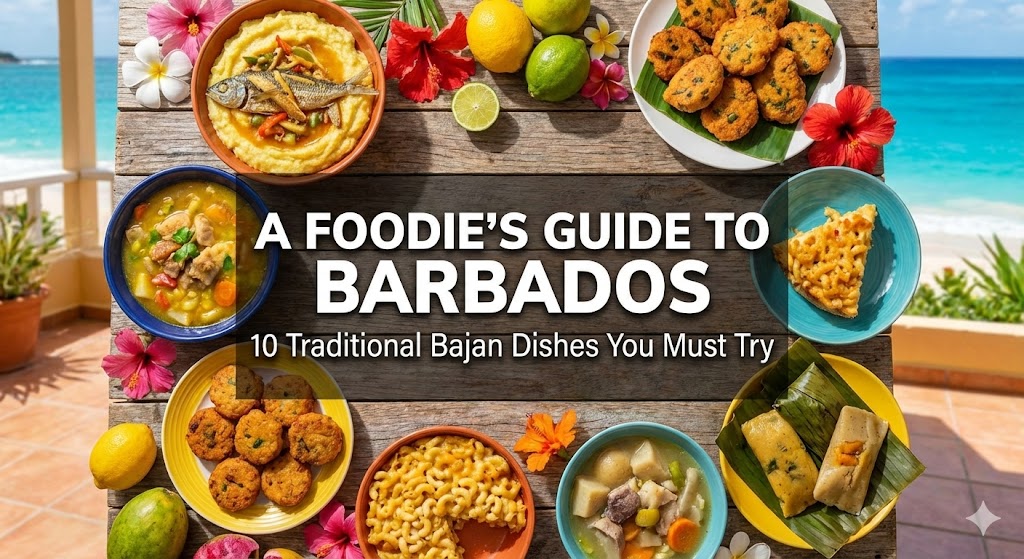
Let’s get this straight from the jump: Pudding and Souse isn’t some dainty appetizer. It’s robust. It’s unapologetic. And it absolutely defines a Barbadian Saturday. When I first stumbled upon this tradition over 20 years ago, covering a piece on 10 Traditional Bajan Foods You Must Try in Barbados Guide, I was immediately struck by the sheer dedication. People line up, sometimes for hours, for their weekly fix. This isn’t just a meal; it’s an institution.
The Anatomy of “Pudding”: More Than Just a Side
Let’s talk about the “Pudding” first, because it’s often misunderstood by those outside Barbados. Forget your creamy, dessert-style pudding. This is a savory, dense, and intensely flavorful steamed creation that forms the perfect counterpoint to the tart souse. There are two main types, and the choice often boils down to family tradition and personal preference:
Sweet Potato Pudding: The Classic Comfort
The most common and arguably the quintessential Bajan pudding is made from grated sweet potato. It’s not simply mashed; it’s grated raw, then blended with a symphony of spices. Think fresh thyme, marjoram, a generous hand with black pepper, and sometimes a hint of scotch bonnet for a subtle kick. Onions, scallions, and a touch of salt are crucial. The mixture is then traditionally steamed in cleaned pig intestines, giving it a unique, earthy flavor and a distinctive cylindrical shape. Don’t balk at the intestines; it’s part of the authentic experience, a nod to the resourcefulness inherent in Bajan cooking. Modern variations might use foil or heat-proof casings, but the old-school vendors, the ones who truly know their craft, stick to tradition. The texture is firm yet yielding, with a subtle sweetness from the potato perfectly balanced by the herbs and spices. It’s soul food, pure and simple.
Cassava Pudding: The Earthy Alternative
Then there’s the cassava pudding. For those who prefer a less sweet, more robust base, cassava is the go-to. Grated cassava root is prepared much like the sweet potato, with the same aromatic herbs and spices. The result is a denser, slightly chewier pudding with a more pronounced earthy flavor. It’s equally satisfying and, in my opinion, offers a deeper, more rustic taste that speaks to the island’s agricultural heritage. Both types are often browned or lightly fried after steaming, developing a slight crust that adds another layer of texture. The choice between them? It’s a lifelong debate among Bajans, a friendly rivalry that fuels countless Saturday morning conversations.
“Souse”: The Tangy, Zesty Heart of the Dish
Now, onto the “Souse.” This is where the dish gets its sharp, exciting edge. Souse is a pickled pork dish, and it’s nothing short of a culinary masterpiece of preservation and flavor. It’s a testament to the Bajan ability to transform humble ingredients into something truly extraordinary.
The Pork: A Celebration of Sustainability
Historically, souse was a way to utilize every part of the pig, ensuring nothing went to waste. This is why you’ll find cuts that might seem unusual to an outsider: pig trotters (feet), snout, ears, and often lean pork belly or shoulder. The selection process is critical. The pork is first meticulously cleaned – a process that demands patience and a keen eye – then boiled until tender. This isn’t a quick blanch; it’s a slow simmer designed to break down tough connective tissues, rendering the meat succulent. Once cooked, it’s cooled and finely diced. The texture varies wildly here, from the gelatinous trotters to the firm, meaty chunks, offering a fascinating textural journey in every mouthful. What some might dismiss as offal, Bajans recognize as pure, unadulterated flavor and tradition.
The Brine: A Symphony of Zing and Heat
But the true magic of souse isn’t just the pork; it’s the brine. This isn’t some bland pickling liquid. It’s a vibrant, aggressive concoction designed to awaken the palate. The base is typically white vinegar, though some traditionalists might incorporate a splash of apple cider vinegar for added complexity. Into this, a generous quantity of thinly sliced white or red onions is folded, along with crisp cucumbers, often diced, and a liberal scattering of fresh scallions. The heat, the quintessential Bajan fire, comes from finely chopped Scotch bonnet peppers. And here’s the journalist’s warning: don’t underestimate it. A Bajan “hint” of pepper can still make your eyes water. Fresh thyme, salt, and black pepper round out the seasoning. The pork is then immersed in this aromatic bath, left to marinate for hours, ideally overnight, allowing the flavors to meld and the meat to absorb that characteristic tangy, spicy punch. It’s a cold dish, served at room temperature, making it incredibly refreshing in the tropical heat.
The Saturday Pilgrimage: A Weekly Culinary Ritual
Why Saturday, you ask? This isn’t some arbitrary decision; it’s deeply ingrained in the rhythm of Bajan life. Historically, Saturday was market day, the day for fresh produce, community gathering, and, crucially, when pigs were slaughtered. The preparation of Pudding and Souse is time-consuming, requiring hours of boiling, cooling, grating, steaming, and marinating. Saturday provided the necessary lull – a break from the work week, a day for families to prepare and share this elaborate meal, or for individuals to make their weekly trek to their favorite vendor. It’s a culinary demarcation, a weekly reset button for the island’s collective palate.

The scene on a Saturday morning is telling. From Bridgetown’s bustling markets to quieter parish stalls, you’ll see queues forming. These aren’t just lines; they’re social hubs. People chat, laugh, catch up on the week’s news, all while patiently waiting for their turn. This isn’t a grab-and-go fast food experience. It’s a communal act, a shared anticipation. The aroma itself—a tantalizing blend of spices, vinegar, and pork—is enough to draw you in. Experienced vendors, often operating from the same spot for decades, work with a practiced efficiency, slicing generous portions of pudding, scooping the glistening souse, and offering a choice of accompaniments like steamed breadfruit or roasted yam. It’s a micro-economy, a cultural institution, and a social affair rolled into one satisfying package.
Tracing the Ancestry: A Dish Forged in Resilience and Resourcefulness
To truly understand Pudding and Souse, one must look beyond its immediate ingredients and into the historical crucible of Barbados. This dish is not merely a recipe; it’s a living artifact of the island’s colonial past and the ingenuity of its people, particularly those of African descent. During the era of enslavement, resources were scarce, and every scrap had value. The European plantation owners consumed the prime cuts of meat, leaving the enslaved populations to subsist on the less desirable parts – the trotters, ears, snouts, intestines. Rather than discard them, these parts were transformed. This “nose-to-tail” philosophy, born of necessity, became a cornerstone of Bajan cuisine. Pickling, a European preservation technique, was adapted and combined with indigenous ingredients and African culinary sensibilities, particularly the bold use of spices and peppers. The result? Souse. The pudding, too, with its reliance on staple root crops like sweet potato and cassava, speaks to the agricultural realities and the creative resourcefulness of the era. It’s a dish that whispers tales of hardship, survival, and the enduring spirit of Bajan culture.

The Unwritten Code: Navigating the Souse Experience
For the uninitiated, approaching a plate of Pudding and Souse might seem straightforward, but there are nuances, subtle rites of passage. First, the serving: it’s typically presented cold or at room temperature. Don’t expect a steaming hot plate. The chilled quality is integral to its refreshing nature. Next, the eating: while a fork is perfectly acceptable, don’t be surprised to see locals using their hands, particularly with the pudding, which is often dense enough to hold its shape. It’s an intimate experience, a direct connection to the food.

What to drink with it? A tall, icy glass of mauby – a traditional Bajan bark-based drink, often spiced with cinnamon and nutmeg – is a classic pairing. Its slightly bitter, sweet, and spiced notes cut through the richness of the pork and complement the tang of the souse perfectly. For those seeking something stronger, a local Banks beer or a potent rum punch is a common companion. The key is to balance the zesty, peppery flavors of the souse. And finally, the unspoken rule: trust your vendor. Every Bajan has their “spot,” their preferred purveyor of Pudding and Souse, often a family business passed down through generations. Ask a local where to find *their* best; you’ll likely get a passionate recommendation that bypasses any tourist trap. Embrace the conversation, engage with the culture, and you’ll find the experience all the richer.
Beyond the Plate: Pudding and Souse as Economic Engine and Cultural Barometer
Pudding and Souse is far more than sustenance; it’s a vital cog in Barbados’s local economy and a potent symbol of its cultural identity. For countless small entrepreneurs, often women, it represents a livelihood, a family legacy.