I’ve watched too many tourists step off a cruise ship, walk straight into a sanitized resort buffet, and declare they “hate Bajan food” because the rubbery chicken breast tasted like institutional cardboard. It breaks my heart. Authentic island cuisine isn’t found under a heat lamp; it’s bubbling in heavy cast-iron pots down dusty side roads, sizzling on drum-can grills at Friday night street parties, and drowning in fiery scotch bonnet pepper sauces that will clear your sinuses out for the next week. If you want to experience the true soul of the island beyond the standard first-timer’s guide to Barbados, you have to throw your dietary caution to the wind. Trust me on this: mastering local flavors requires a complete surrender to spice, fat, and a deep-seated love for the sea.
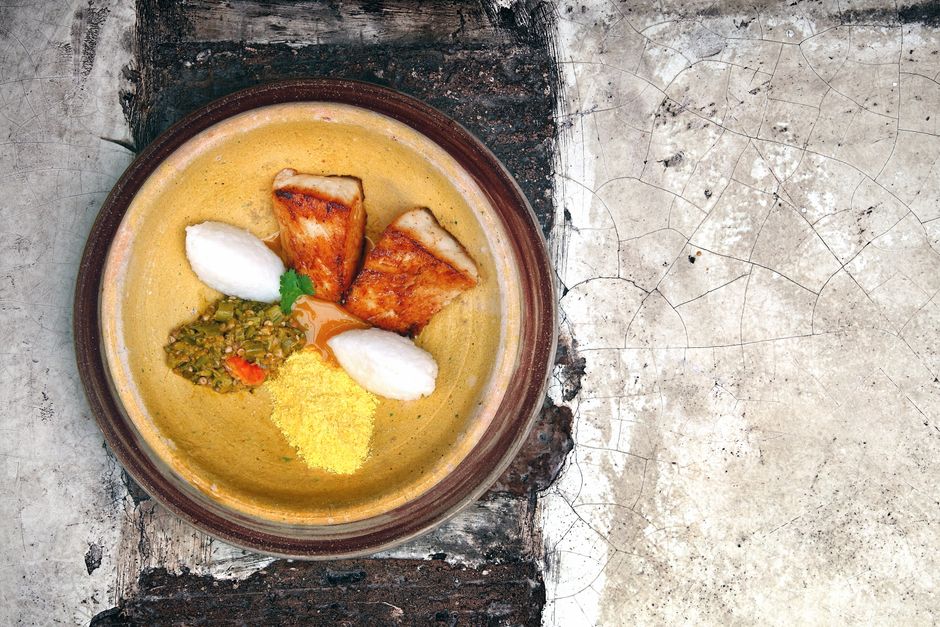
The Holy Grail: Flying Fish and Cou-Cou
You cannot talk about local eats without bowing down to the undisputed heavyweight champion of the island: flying fish and cou-cou. Officially recognized by the National Dish of Barbados, this pairing is an absolute must-eat. The fish is typically steamed with lime, onions, tomatoes, and thyme, or alternatively, breaded and fried to a crisp golden crunch. Then comes the cou-cou. Made from cornmeal and okra, stirred rhythmically with a wooden paddle known appropriately as a “cou-cou stick,” its texture resembles a buttery, savory polenta. It’s comforting, heavy, and deeply rooted in African heritage.
Here’s the catch: the way you eat it matters. Real locals don’t use a knife. You scoop the cou-cou with your fork, drag it through the rich Creole gravy left from the steamed fish, and chase it with a bite of flaky, tender meat. It’s messy. It’s glorious. And if you are trying to figure out how to pay for your meal at a tiny mom-and-pop joint, make sure you check out the Barbados Currency Guide beforehand so you know whether to hand over US or BBD cash without getting swindled on the exchange rate.
Beyond the Basics: Macaroni Pie and Bajan Pigtails
Let’s address the elephant in the room. Bajan macaroni pie is not your boxed Kraft dinner. Oh no. This is baked, heavy-duty comfort food packed with sharp cheddar cheese, mustard, onions, and sometimes a sneaky hit of ketchup baked right into the crust. It’s dense enough to act as a brick for a house, and locals treat it as a side dish for literally everything—fried chicken, stewed pork, you name it.
Then you have pudding and souse. Don’t let the polite name fool you. “Pudding” is actually sweet potato steamed in a sausage skin with herbs, while “souse” is pickled pork head, tongue, and trotters soaked in lime juice, cucumber, onions, and hot peppers. It’s traditionally eaten on Saturdays, a custom deeply embedded in working-class culture. If offal isn’t your speed, lean into the broader culinary scene supported by organizations like the Barbados Tourism Marketing Inc., which highlights everything from high-end dining to humble street shacks.
Anatomizing the Trinity: Green Seasoning and Pepper Sauce
Why do home-cooked meals in St. Philip taste entirely different from anything you can replicate back home in your suburban kitchen? The answer lies in the mortar and pestle. Bajan culinary identity rests heavily on “green seasoning”—a potent, pungent paste composed of fresh thyme, marjoram, chives, garlic, scotch bonnet peppers, and onions blended into a vibrant emerald slurry. Every household guards their precise ratio like a state secret, rubbing it deep into the flesh of pork, beef, and snapper hours before a flame ever touches the meat.
Then there is the fiery baseline of every local table: Bajan pepper sauce. Unlike the vinegary, thin hot sauces dominating commercial supermarket shelves, authentic island pepper sauce is thick, mustard-based, and aggressively yellow. It incorporates grated scotch bonnets, turmeric, mustard powder, and vinegar. How much do locals use? A single yellow drop can turn a mild plate of rice and peas into an adrenaline sport. If you start sweating profusely and questioning your life choices on your second bite, congratulations—you are doing it right.
From Street-Side Shacks to the Oistins Phenomenon
Let us clear up the romanticized myth that you need reservations at a white-tablecloth establishment to eat well on the island. The beating heart of Bajan street culture thrives on galvanized zinc roofs and smoke-billowing drum cans. Take the ubiquitous breadfruit, for instance. Roasted directly over glowing coals until the outer skin turns jet black and charred, the starchy interior steams into a texture resembling baked potato crossed with freshly baked bread, smeared generously with salted butter.
And yes, you cannot discuss island nightlife without mentioning the Friday night ritual at Oistins Bay Garden. While tourists crowd the main stalls for mahi-mahi and flying fish, seasoned travelers know to watch the smoke signals rising from the back corners. Watch the fishermen clean their catch by the docks in the afternoon, and you will understand why the grilled marlin on your paper plate tastes like it was swimming an hour prior. Pair that greasy, charred perfection with an ice-cold Banks beer, and you achieve a transient state of pure Caribbean equilibrium.
Where to Eat Like a Local Without Breaking the Bank
Forget the overpriced tourist traps lining the Gold Coast. If you want authentic flavors, you need to seek out two distinct institutions: the local rum shop and the roadside fish fry. Rum shops are colorful, unassuming wooden shacks painted in vibrant island hues. They double as community centers, convenience stores, and the best cheap kitchens on the island. Walk in, order a rum punch or a Banks beer, and ask what the “cook-up” of the day is. You might get lucky and score a plate of flying fish cutters—essentially salt bread stuffed with fried fish and hot pepper sauce—for pennies.
If you’re keeping an eye on your wallet, eating at these local spots is a core pillar of any smart strategy when learning how to visit Barbados on a budget. Skip the air-conditioned restaurants with English menus; head straight to Oistins Bay Garden on a Friday night, or find a random lady selling fish cakes out of the back of a van in Bridgetown. The grease might be heavy, but the memories will last a lifetime.
Frequently Asked Questions
What is the national dish of Barbados?
The national dish is flying fish served with cou-cou, a cornmeal and okra-based side dish. It is traditionally eaten on Fridays and reflects a deep blend of African and Caribbean culinary roots.
Are Bajan dishes extremely spicy?
Not inherently, but Bajan cuisine relies heavily on seasoning pastes (green seasoning made from fresh herbs, garlic, and onions) and the famous local pepper sauce. Heat levels vary, but you can almost always add or avoid the scotch bonnet pepper sauce on the side.
What is a Bajan “cutter”?
A cutter is a quintessential local sandwich made with fresh salt bread—a crusty, airy Bajan bread roll—stuffed with fillings like flying fish, ham, cheese, or saltfish, and dressed with lettuce, tomato, and pepper sauce.
Can I find good vegetarian options in traditional Bajan food?
Traditional Bajan cuisine is heavily meat- and fish-centric, but plant-based eaters can enjoy macaroni pie (though it contains dairy), plantains, breadfruit, rice and peas, and rich vegetable stews. Modern restaurants across the island are also increasingly adapting traditional flavors for vegans.
What is the story behind Bajan rum shops?
Rum shops are historic community hubs scattered across every parish in Barbados. Historically serving plantation workers, today they function as informal social clubs where locals gather to drink rum, play dominoes, and buy inexpensive home-cooked meals like fish cutters, stewed pork, and pudding and souse.
Why is pudding and souse traditionally eaten on Saturdays?
The Saturday tradition dates back to the colonial era when weekend pig slaughters meant fresh pork parts had to be cooked and consumed immediately before refrigeration existed. Today, it remains a beloved weekly ritual celebrated in homes and rum shops island-wide.